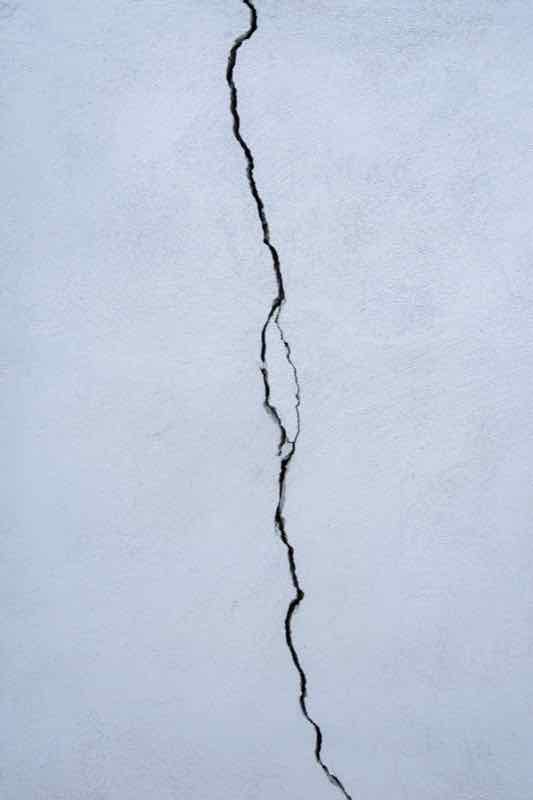
Table of Contents
Most stucco cracks are hairline cracks, which the stucco industry treats as normal. Cracks wider than about 1/16 inch (roughly 1.5 mm) are worth watching. Cracks you can see from 10 feet away, cracks that leak or keep growing, and any damage that comes with staining, bulging or soft spots need repair, because they point to water getting behind the wall. Water is what turns a small repair into a large one, so the goal is to catch it early without paying to fix cracks that were never a problem.
Key Takeaways
- Hairline cracks up to about 1/16 inch are normal in stucco and don't need patching on their own.
- Wider or growing cracks, dark streaks, white salt deposits, rust stains, bulges and soft spots are signs of water, and need attention.
- Fix where the water gets in before fixing the finish, or the damage comes back.
- A proper inspection checks for moisture behind the wall, not just what's visible on the surface.
Which stucco cracks are normal?
Almost every stucco house has some cracking. Stucco is a rigid cement plaster on a house that moves a little with temperature, moisture and settling, so fine cracks are expected. Stucco Manufacturers Association guidance, as published by a member plastering contractor, defines hairline cracks as those smaller than 1/16 inch, says patching them isn't recommended, and calls minor cracking at the corners of doors and windows "reasonable" and to be anticipated. A crack visible from more than 10 feet away, or one that leaks, should be patched (SMA crack guidance via Hart Plastering). The Walls & Ceilings Council's crack bulletin sets a tighter line, treating cracks up to 1/32 inch as inherent in cement plaster (WCC Technical Bulletin 6.002). Read together, a crack under 1/32 inch can be left alone, and one between 1/32 and 1/16 inch is worth marking and watching.
Don't judge width with a credit card. At about 0.76 mm, a card is only half the hairline limit. Use a crack-width gauge or a ruler with millimetre marks.
Fine hairline cracks in a random "map" pattern, small cracks that haven't changed in a year or two, and faded or uneven colour with no crumbling or staining can usually wait for routine maintenance. Photograph any crack you're unsure about with a ruler for scale and compare it each season. A short pencil line across each end of the crack, with the date written beside it, shows at a glance whether it has grown past the mark.
Signs that need attention soon
Wider or growing cracks
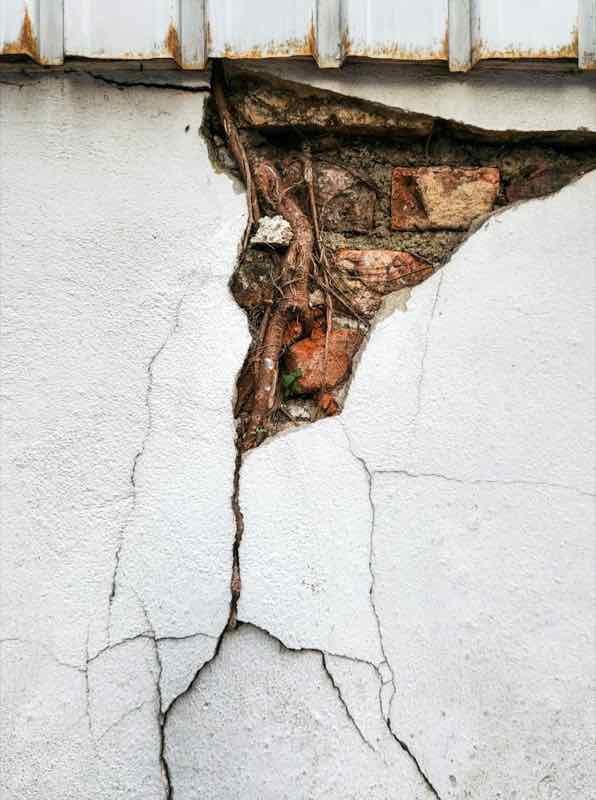
Minor cracks at window and door corners are expected. Corner cracks wider than about 1/16 inch, and any crack you can see getting longer, are more than surface shrinkage. They give water a direct path to the lath and the wall behind the stucco.
Long, straight cracks across a wide wall, or running from one window corner to the next, often mean the wall has too few control joints. Walls & Ceilings describes stucco cracking as stress relief: where there's no joint to take the movement, the wall cracks on its own, usually at openings and across large panels (Walls & Ceilings). A patch on that kind of crack tends to crack again unless the missing joint is dealt with too.
Dark streaks and staining
Streaks running down from windows, sills, ledges or the roofline usually mean water is running somewhere it shouldn't, or soaking into the wall and drying out again. Look at where the streak starts. That's usually where the water gets in. If it starts where a lower roof meets the wall, check for a kick-out flashing, the small angled piece at the bottom of the roof edge that turns water into the gutter instead of down the wall. The U.S. Department of Energy's Building America program lists a missing kick-out as a common way roof water gets into walls (Building America Solution Center).
White, powdery deposits
A white, chalky bloom on the surface is efflorescence: salts carried out of the cement by water and left behind as it evaporates. A little on brand-new stucco can be normal. On an older wall that keeps coming back, it means the wall is getting wet and drying out repeatedly, so look for the source (Stucco Manufacturers Association).
Rust stains
Orange or brown stains weeping from a crack or along a corner often mean the metal lath or corner bead underneath is corroding. Rust expands as it forms, which can push cracks wider and cause bulging, so treat rust staining as a sign of long-term moisture.
Bulging, soft or hollow-sounding spots
Press and tap along the wall. A section that bulges, feels soft or sounds hollow compared with the stucco around it may have moisture behind it, or the stucco may have come away from the lath. Act on this one quickly: the hidden damage is usually larger than the visible patch. (If the whole wall sounds hollow, it may be EIFS rather than stucco. See how to tell stucco and EIFS apart.)
Crumbling at edges and near the ground
Stucco breaking away at corners, around windows and doors, or where the wall meets the foundation is a common way water gets in. The bottom of the wall takes the most splash, snow and road salt. Building guidance from the U.S. Department of Energy's Building America program calls for the base of the cladding to sit at least 8 inches above grade, with the ground sloping away from the wall (Building America Solution Center). Stucco buried in soil or mulch stays wet and breaks down faster. On three-coat stucco, the bottom edge usually finishes on a metal weep screed with small holes that let water drain out of the wall. If yours has disappeared under soil, mulch or a raised patio, the wall can't drain.
Failed sealant around windows, doors and penetrations
Cracked or missing sealant around windows, doors, vents, pipes and light fixtures lets water in exactly where the wall is hardest to keep dry. Walk around and check these joints each spring and fall. Resealing them is cheap compared with repairing the wall behind them.
Why Toronto winters make it worse
Water in a crack freezes, expands and pushes the crack open a little further. Toronto averages about 100 nights a year below freezing, from November through April (ECCC climate normals), so a crack that lets water in gets worked open again and again over a single winter. Snow piled against the base of a wall, and salty slush from driveways and sidewalks, keep the lowest part of the wall wet for weeks. Sealing entry points before the cold is almost always cheaper than repairing the damage afterwards. Once you know what you're dealing with, our stucco repair services cover everything from crack filling to rebuilding wet sections. If you've found damage late in the season, see what can and can't be repaired in a Toronto winter.
What not to do
A few common fixes make stucco problems worse:
- Don't use high-pressure washing. It can drive water behind the finish. For its EIFS systems, Dryvit specifies pre-wetting the wall and staying under 500 psi with a fan tip, at least 12 inches from the surface (Dryvit).
- Don't paint over the problem. Oil-based and other non-breathable coatings can trap moisture in the wall. Dryvit says never to use oil-based paint on its systems because it can trap moisture (Dryvit).
- Don't just caulk a crack that's widening or stained. Sealant can close a stable hairline crack. On an active one it hides the symptom while water keeps getting in.
What to do next
- Photograph the damage with something for scale, and note the date.
- Check inside the matching interior wall for stains, peeling paint, soft drywall or a musty smell.
- Deal with mould properly. Health Canada's guidance is to find and fix the source of moisture first, including repairs to walls, windows and the foundation when water comes from outside, and to get professional help for mould covering more than about 3 square metres (Health Canada).
- Check your insurance wording. Policies often treat slow, long-term water damage differently from sudden leaks, so read yours and keep your dated photos.
- Get a moisture inspection if you see bulging, soft spots, staining under windows or a musty smell. Cladding inspectors usually start with a non-invasive moisture scan, then test suspect spots with a probe through small holes that are sealed afterwards. That tells you how far any water damage goes before anyone quotes a repair.
If you're seeing any of these signs, book a free on-site estimate. We'll tell you honestly what's cosmetic, what needs fixing now, and what can wait.